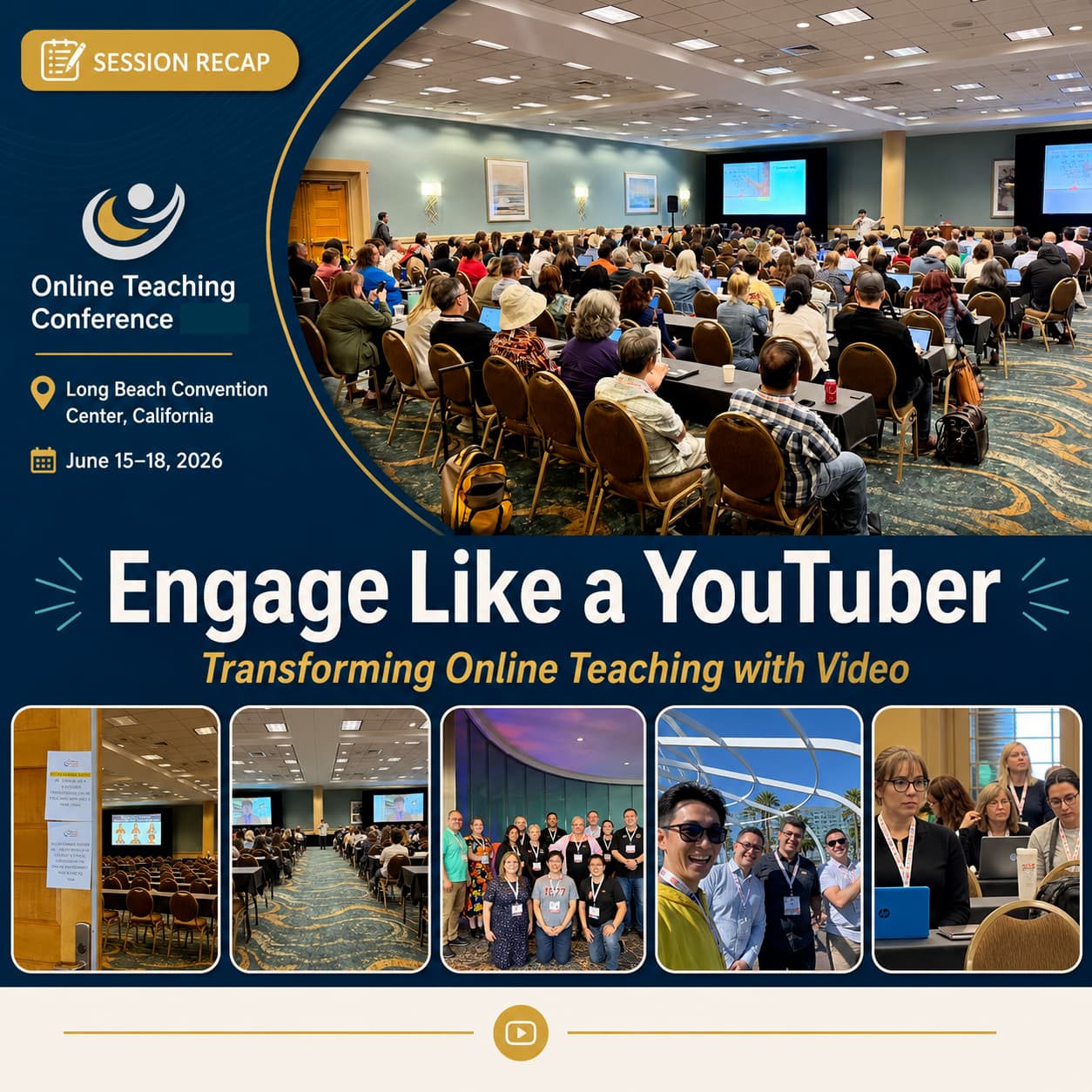
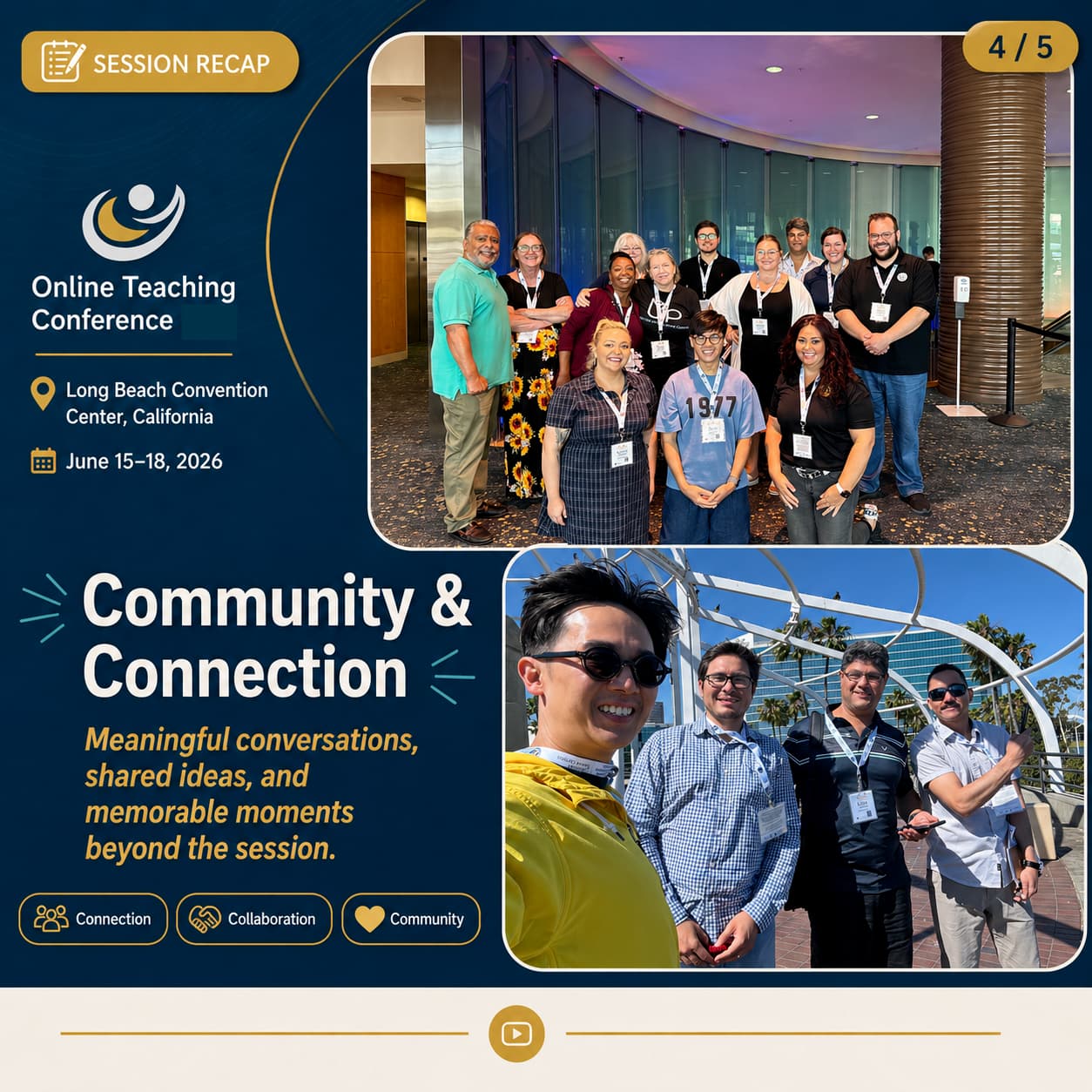
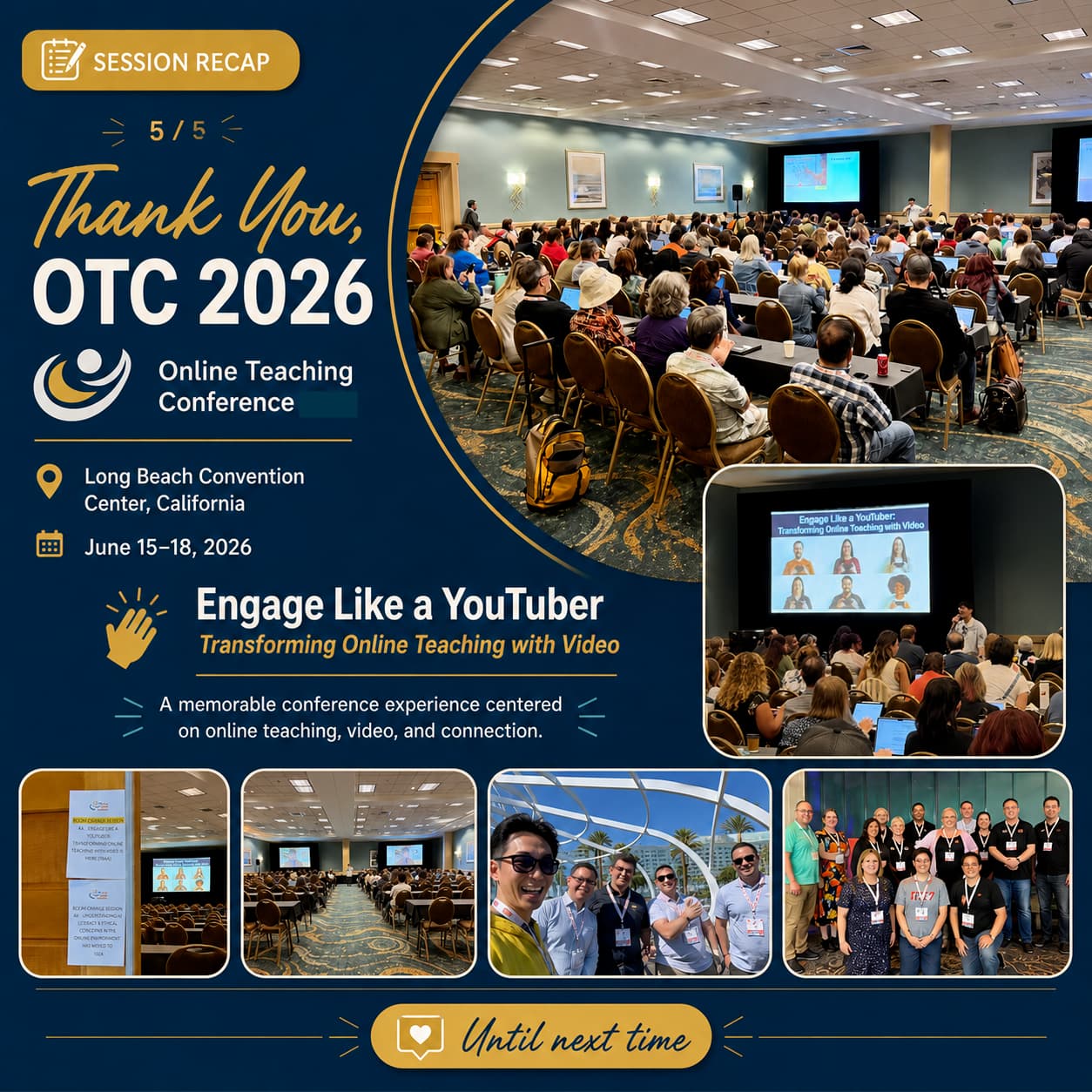
Distance learning doesn't have to feel distant. That was the message — and a quirk of conference logistics turned the morning of the talk into a memorable proof of it.
Why this session
The proposal came out of years of practice — Dr. E's work as a math faculty member at Barstow Community College and his experience teaching fully online and hybrid math courses. The Online Teaching Conference accepted it as a plenary because the topic sits at the intersection most community college faculty are still navigating: how do you teach with presence and energy when the classroom lives behind a screen?
The room change
The day before the talk, Dr. E walked the assigned room and rehearsed for what he'd been told would be a 30-person audience. Then, the morning of the presentation, a text from the organizers landed: the room was being moved.
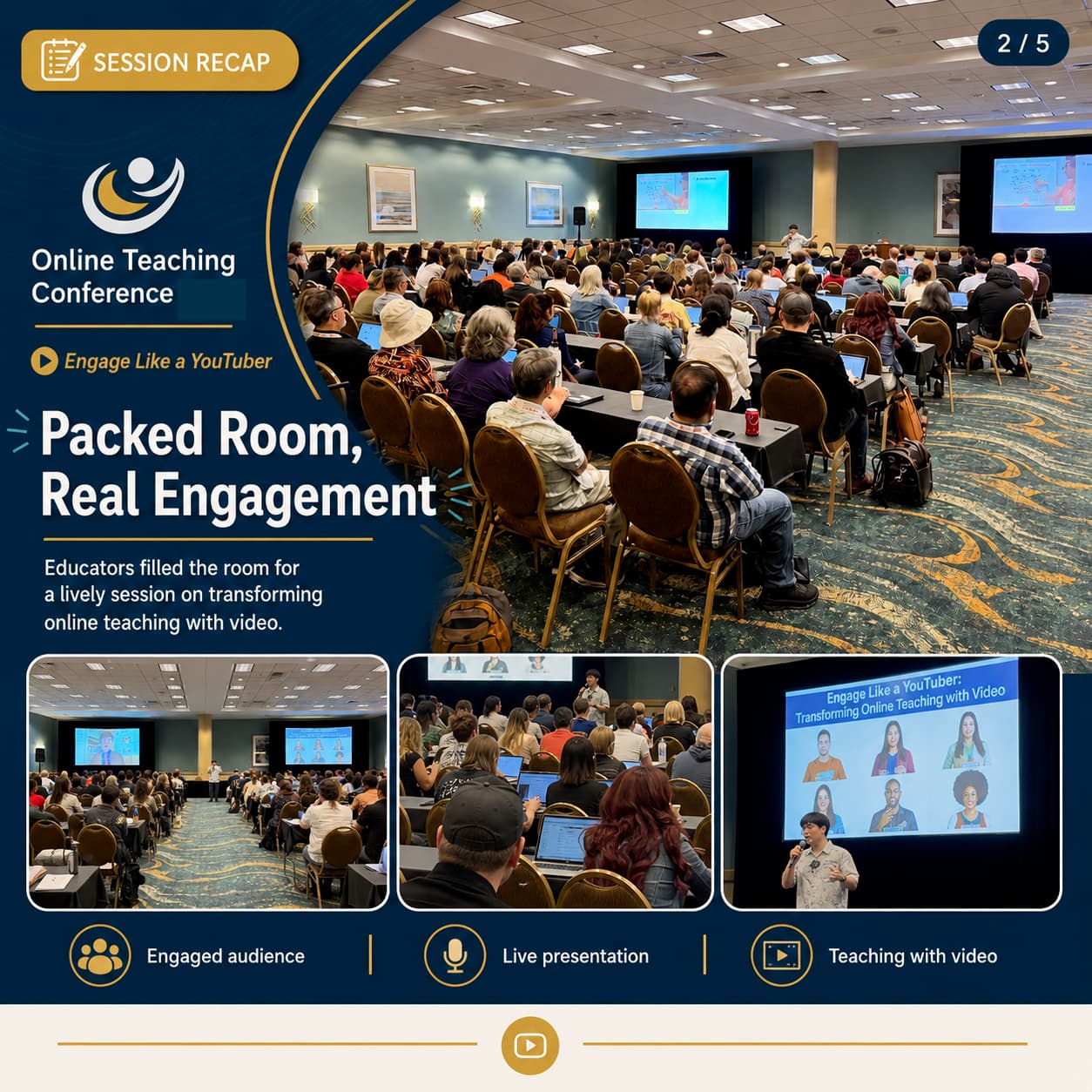
By the time he wheeled his suitcase of equipment to the new location, it was the largest ballroom in the Long Beach Convention Center — capacity in the hundreds. The organizers had received so many reservations they had to bump him to a venue that could absorb the overflow.
I had prepared the night before for a small room. The morning of, I made a last-minute psychological pivot to scale the same presentation to a much bigger audience. By the second half it was standing-room-only, with teachers sitting on the floor.
The core message
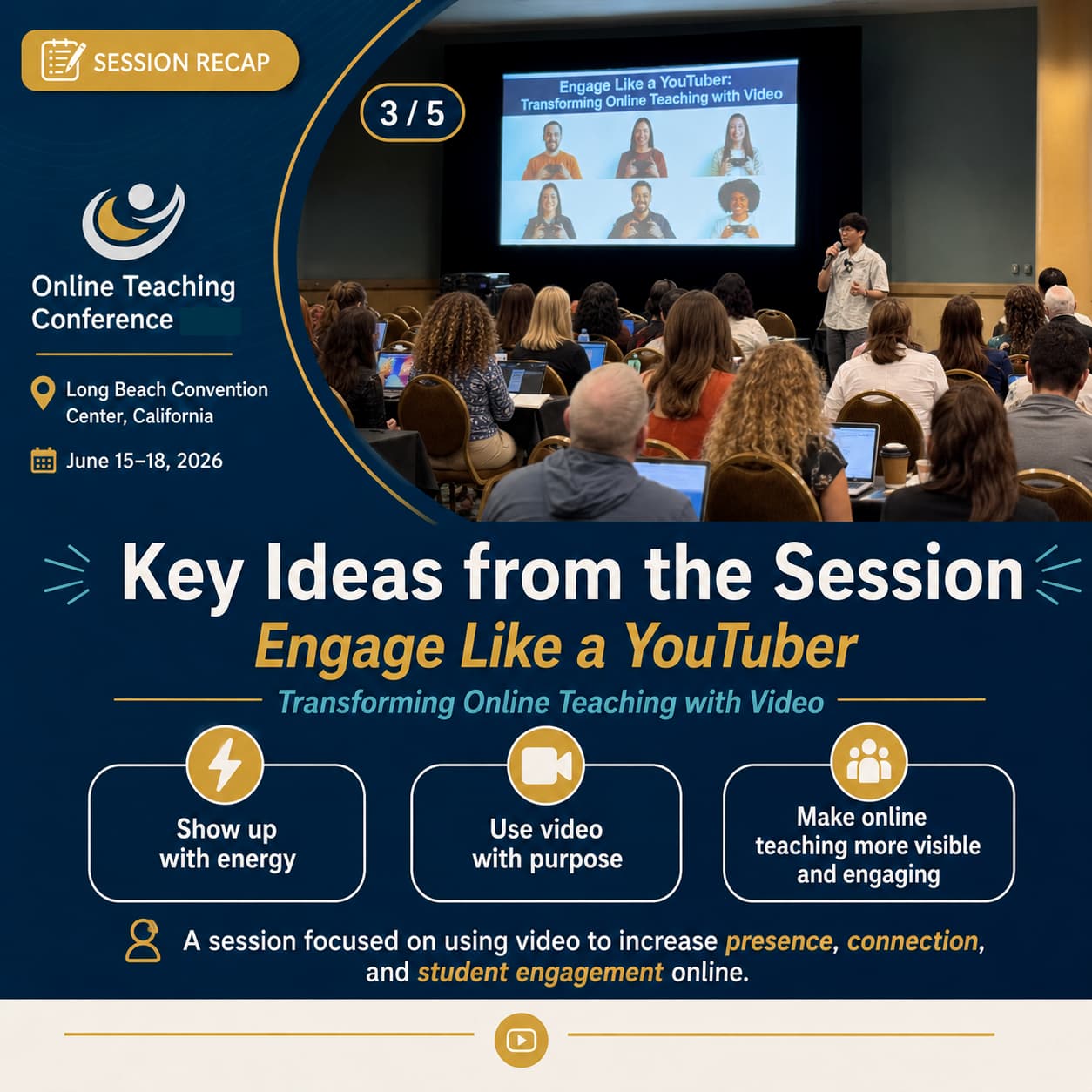
You don't need to become a viral content creator to teach with creator energy. You need to use video for the small, repeatable moments that already exist in every online class:
- A 2-minute weekly announcement instead of a wall-of-text email.
- A 5-minute Canvas walkthrough instead of a written FAQ no one reads.
- A 2-minute class expectations video — deadlines, policies, the "meat" of the work.
And a length rule: students don't watch teaching videos longer than four minutes. Make it quick. Make it specific. Make it human.
Key takeaways from the session
- Recording your first video is awkward — pull it off and bite the bullet. No one starts at 100. Everyone starts at 0. The skill builds over time.
- If you curate someone else's content for your students, record a short intro of your own. Pushing students toward another creator's video without context is like leaving a sub for your class without telling the kids what to expect.
- It's 2025, not 1995. If you're still running online classes by asking students to read long blocks of text, that's a paradigm worth shifting. We're in the YouTube era — meet students with the medium they already understand.
What people said
"It's fantastic meeting you at the Online Teaching Conference this past week. I enjoyed your workshop not just for the insightful content but also for your awesome energy."
"You're a rockstar!"
What's next
The return happened: OTC 2026 in Anaheim, a keynote-sized venue, full again. Read the OTC 2026 recap →